

Get More Visibility from Google Ads: What Performance Max Reporting Improvements Mean for Local Businesses
When local businesses invest in Google Ads, the biggest question is usually simple: Where is the money actually going, and is it bringing in the right customers?
Google’s latest updates to Performance Max reporting are a step in the right direction, especially for small and mid-sized businesses that don’t have time to dig through confusing dashboards or guess what’s working.
At LAUNCH805, we manage Google Ads as part of a full website marketing strategy that includes local SEO, WordPress optimization, and conversion tracking. These reporting improvements help make paid advertising more transparent and easier to tie back to real business outcomes.
Why Performance Max Has Felt Like a Black Box
Performance Max campaigns run across Google’s entire network automatically, Search, Display, YouTube, Gmail, Discover, and Maps. That reach can be powerful, especially for local service businesses.
The downside has always been visibility. Business owners could see overall results, but not clearly understand:
- Which channels were driving leads
- Which ads were being shown on which devices
- Where budget was being spent versus wasted
For professionals trying to grow locally, that lack of clarity made it harder to trust the data or confidently scale campaigns.

What’s Changed with the New Reporting Updates
Google has expanded Performance Max reporting to give advertisers more control and insight, without needing enterprise-level tools or analysts.
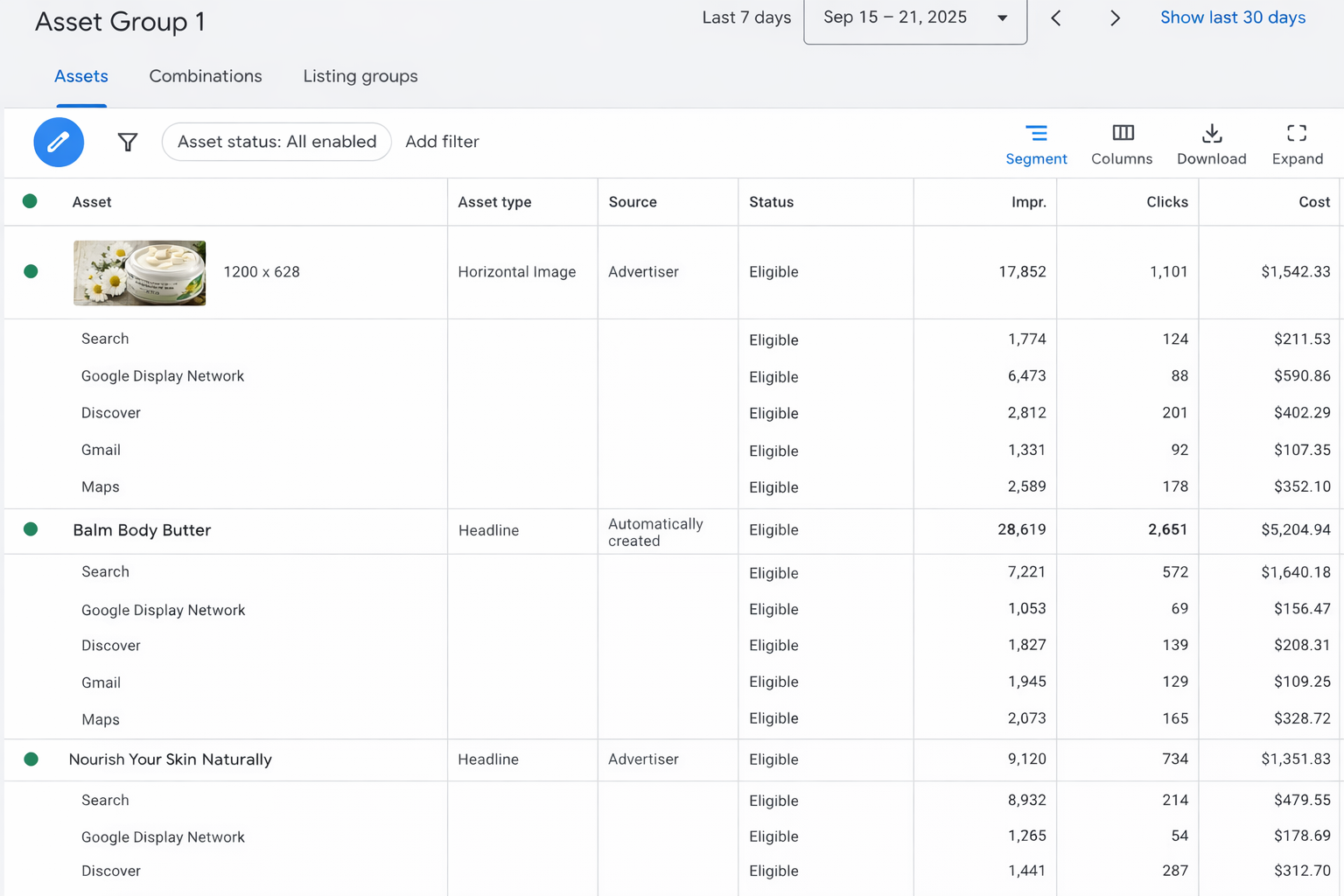
- Segmentation by Networks: Use the segmentation tool to break down your data by device, time, conversion, or network. By selecting Network, you can pinpoint exactly how your assets are performing across Search, Display, Discover, Gmail, YouTube, and Maps.
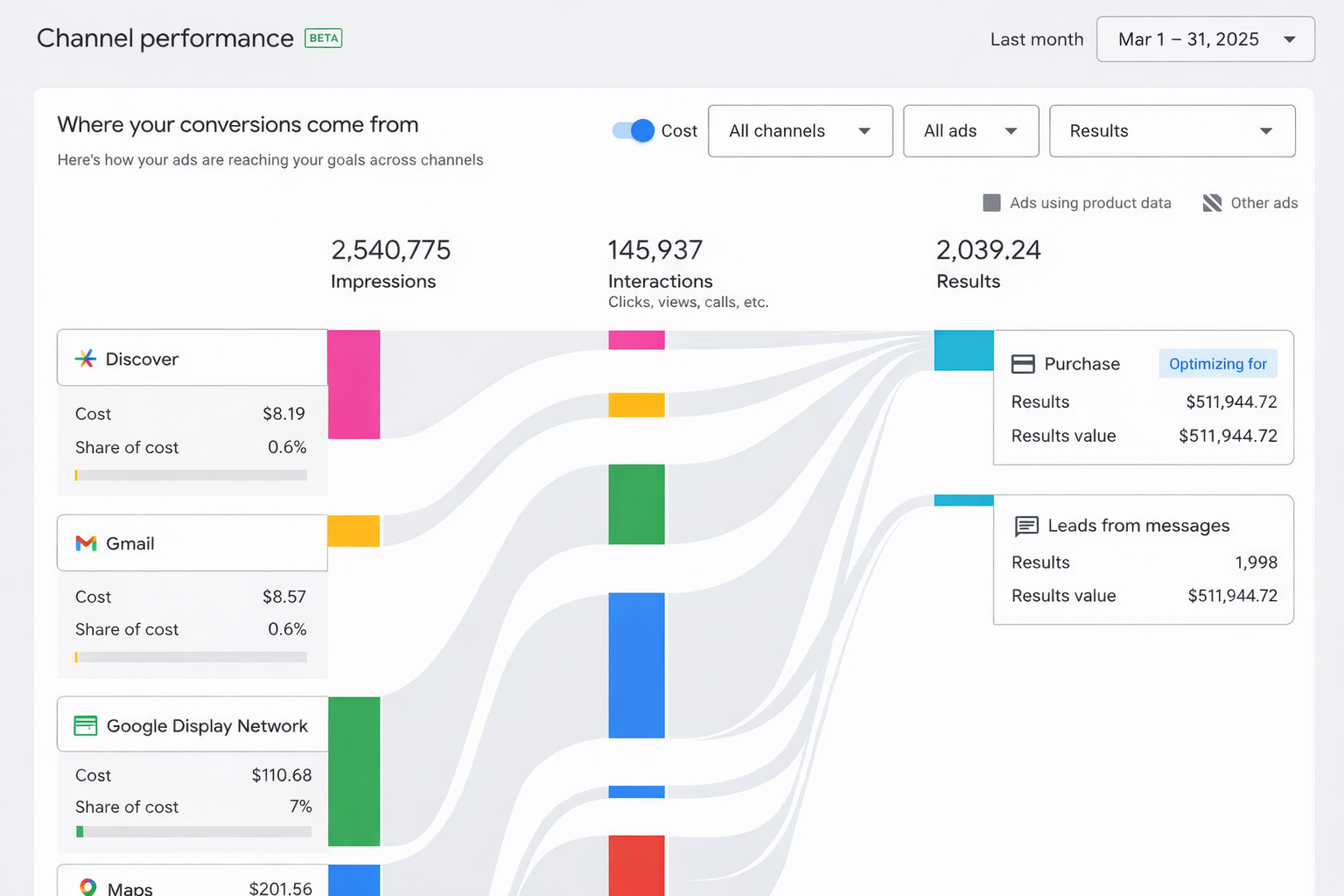
- Cost Per Channel: To view your spend per channel, navigate to the channel performance report and simply switch on the “Cost” toggle.
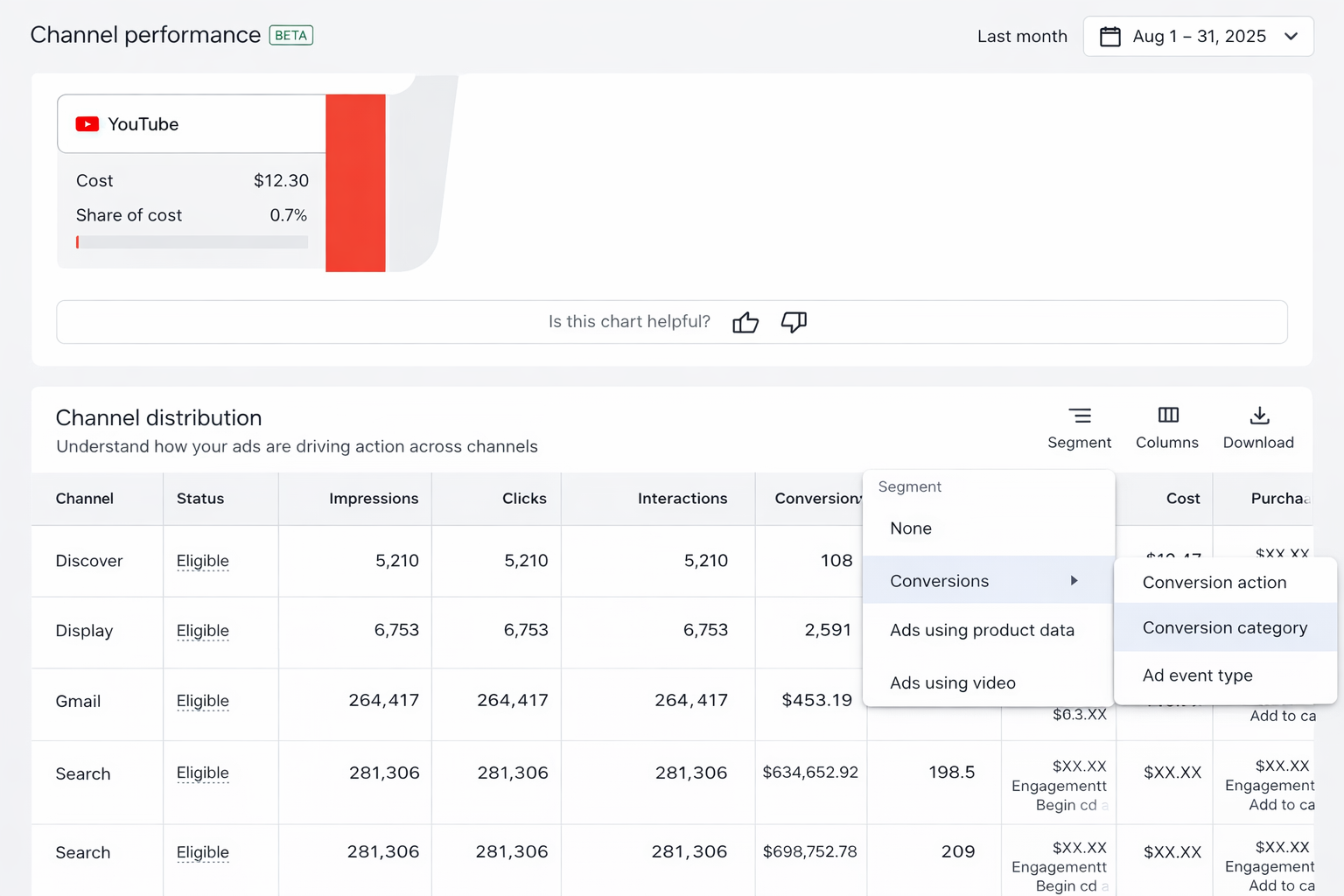
- Segmentation by Channel and Conversions: The channel distribution table now supports advanced segmentation. You can now break down your channel performance data by both conversion action and ad event type.
Clearer Asset Performance
You can now segment asset reports by:
- Device type (desktop vs mobile)
- Time and date
- Conversion type
- Google network
In plain terms, this means we can see which images, headlines, or videos actually perform best for local customers, and where they’re being seen.
If something works on mobile but not desktop, or performs better on Maps than YouTube, that information is now visible.
Better Channel-Level Transparency
Google has also improved channel performance reporting, which matters a lot for local businesses that rely on Search and Maps visibility.
New features include:
- Account-level bulk reporting across campaigns
- Cost breakdowns by channel
- ROI columns that show return, not just spend
- Conversion-specific reporting (calls, forms, engaged views)
- Diagnostics that explain why ads may not be serving fully
This allows us to answer real questions business owners ask every day:
- Are ads driving phone calls or just views?
- Is Google Maps pulling its weight?
- Are we spending too much on awareness and not enough on leads?
Why This Matters for Local SEO and Website Marketing
Paid ads do not exist in isolation. For local businesses, they work best when they support strong SEO, a well-built WordPress site, and a clear conversion path.
These reporting updates help us:
- Align Google Ads with local SEO goals
- Prioritize channels that support branded searches
- Improve landing pages based on conversion data
- Avoid wasted spend on low-intent traffic
When ads, website performance, and reputation management are connected, results compound instead of competing.
Turning Data into Decisions (Not More Reports)
More data only helps if it leads to better decisions. The real value of these updates is not the charts, it’s the clarity.
For Santa Barbara professionals and service-based businesses, that clarity means:
- Smarter budget allocation
- Faster optimization
- More qualified leads
- Less guesswork
At LAUNCH805, we use these insights to manage Google Ads alongside SEO, link building, social media, and website optimization, so each channel supports the others.
The Bottom Line
Google is moving Performance Max in a more transparent, practical direction. For local businesses, that’s good news.
Better reporting means better accountability, and better accountability means marketing decisions based on what actually brings in customers, not assumptions.
As Google continues to roll out improvements, we’ll keep translating those changes into strategies that make sense for real businesses, real budgets, and real local growth.